

Flip Spot
Flip Spot makes routine movement an aerial arcade challenge. As they navigate obstacle-filled terrain, players decide whether to jump, flip, and focus on landing safely.


















Flip Spot makes routine movement an aerial arcade challenge. As they navigate obstacle-filled terrain, players decide whether to jump, flip, and focus on landing safely. Success depends on understanding each section rather than performing tricks at every opportunity.
Managing Momentum
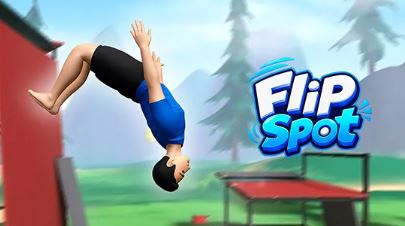
Speed impacts distance and control. Too little momentum can leave a character without enough distance to reach a platform, while too much speed can hinder recovery. Players can conquer harder challenges by learning the appropriate movement for each section.
Class Challenges
- Barriers and gaps
- Narrow landing areas
- Air jumps and flips
- Rearranging obstacles
- Momentum-based movement
- Balance and positioning
- Growing difficulty
- Skill-based replayability
Read the Course First
Each section may require a unique strategy. Wider gaps allow aerial rotations, while others are easy to jump over. Early identification of the landing area helps players make confident moves and avoid committing to unnecessary tricks.
Practice the Hard Parts
Failures can reveal vital information. Players might see if a jump was too early, a flip was too lengthy, or the landing needed to change. Repeatedly practicing challenging passages makes unfamiliar movements more predictable.
Useful Habits
- Check the landing before flipping.
- Use just enough speed to clear the hurdle.
- Avoid unnecessary tricks in tight spaces.
- Keep airborne adjustments gentle.
- Train difficult areas instead of racing through them.
- Choose a safe landing over an extra trick.
Controls
Spacebar — Jump / Flip
W / Up Arrow — Forward
A / Left Arrow — Move Left
D / Right Arrow — Move Right
Esc — Pause
Landing First
Flipping is impressive, but safety is more important. Before starting an aerial trick, players should determine where the character will land. A minor adjustment near the conclusion of a jump can help stabilize the landing and keep the run alive.
What Keeps Flip Spot Interesting
Each run can improve through jumping, rotation, momentum, and obstacle avoidance. Players can make a difficult portion easier by understanding how movement and timing work together instead of relying on repeated guesses.
Continue Running
Flip Spot prefers controlled aerial movement over constant tricks. Players may travel farther, overcome harder sections, and improve their runs through better timing, momentum management, positioning, and reliable landings.